Homeপ্রচ্ছদ · Ornamentationঅলংকরণ
Chapter V — Ornamentation & Artistic Details পঞ্চম অধ্যায় — অলংকরণ ও শিল্পকলা

Where stone
becomes lace.
যেখানে পাথর
হয়ে ওঠে জরি।

If the architecture is the skeleton, the ornament is the speech. Every visible inch was once carved, painted or gilded — a small encyclopaedia of late-Sultanate decorative grammar. স্থাপত্য যদি কঙ্কাল হয়, অলংকরণই কণ্ঠস্বর। প্রতিটি দৃশ্যমান ইঞ্চি একদা ছিল খোদিত, রঞ্জিত বা স্বর্ণমণ্ডিত — পরবর্তী সুলতানি অলংকার-ব্যাকরণের এক ক্ষুদ্র বিশ্বকোষ।

An Introduction প্রবেশিকা

A repertoire of carving — restrained, dense, devotional. খোদাইয়ের এক ভাণ্ডার — সংযত, ঘন, ভক্তিময়।

The decorative programme of Choto Sona Mosque is unusually disciplined for a Husain Shahi monument. Where contemporaries indulge in extravagant variety — Adina's wild profusion, Tantipara's voluptuous brick — the small golden mosque chooses repetition, rhythm and a small set of motifs executed with consummate care. ছোট সোনা মসজিদের অলংকরণ-প্রকল্প হুসেন শাহী স্মারকের তুলনায় অস্বাভাবিকভাবে সংযত। যেখানে সমসাময়িকেরা প্রাচুর্যময় বৈচিত্র্যে ভাসেন — আদিনার প্রবল বহুমুখিতা, তন্তিপাড়ার কামনায়িত ইট-শিল্প — সেখানে এই ছোট সোনা মসজিদ বেছে নেয় পুনরাবৃত্তি, ছন্দ এবং অল্প কিছু ছাঁদ — সর্বোচ্চ যত্নে নির্মিত।

Three categories of ornament dominate: stone carving on the exterior surfaces, glazed mosaic roundels embedded in spandrels and panels, and terracotta accents in transitions. Together, they perform a hierarchy of luxury — stone for the sacred, mosaic for the celebratory, terracotta for the connective tissue. তিন প্রকারের অলংকরণ প্রাধান্য পায়: বহিঃপৃষ্ঠে পাথর-খোদাই, স্প্যান্ড্রেল ও প্যানেলে গ্লেজ-করা মোজাইক রাউন্ডেল, এবং অন্তর্বর্তী স্থানে পোড়ামাটির অলংকরণ। একত্রে এরা গড়ে তোলে এক বিলাস-শ্রেণিবিন্যাস — পবিত্রতার জন্য পাথর, উদযাপনের জন্য মোজাইক, সংযোগের জন্য পোড়ামাটি।
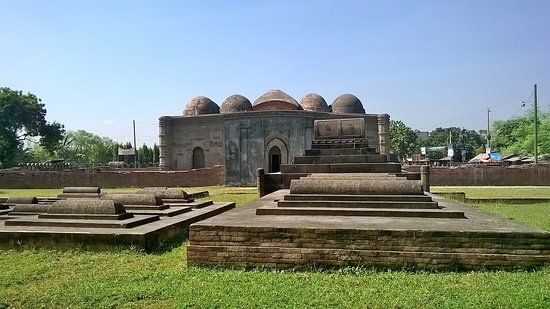
Carved detail খোদাইয়ের বিশদ Detailed view of Choto Sona Mosque ornamental stonework
A Vocabulary of Motifs ছাঁদের শব্দভাণ্ডার

Six motifs do most of the talking. ছয়টি ছাঁদই বহন করে অধিকাংশ অলংকার-সংলাপ।

Mosaic Roundel মোজাইক রাউন্ডেল

Discs of glazed tile — blue, white, occasionally green — set into stone spandrels above each arch. Persian in origin, Bengali in execution. গ্লেজ-করা টাইলের চাকতি — নীল, সাদা, কখনো সবুজ — প্রতিটি খিলানের স্প্যান্ড্রেলে স্থাপিত। উৎসে পারসিক, রূপায়ণে বঙ্গীয়।

Vegetal Arabesque উদ্ভিদ-অরাবেস্ক

Endless interlaced foliage — vines, leaves, palmettes — carved into stone borders. The "endlessness" is a theological gesture: God's creation has no terminus. অন্তহীন গূঢ় পত্র-পল্লব — লতা, পাতা, পামেট — পাথরের সীমান্তে খোদিত। এই "অসীমতা" একটি ধর্মতাত্ত্বিক ভঙ্গিমা: ঈশ্বরের সৃষ্টির কোনো অন্ত নেই।

Geometric Net জ্যামিতিক জাল

Star-and-polygon nets carved on the dado — endless tessellations that meet at six-, eight- and twelve-pointed stars. Mathematics turned worship. তারকা ও বহুভুজের জাল ক্ষুদ্র ক্ষেত্রে খোদিত — যেখানে ছয়, আট ও দ্বাদশকোণ তারকা মিলিত। গণিত পরিণত হয়েছে উপাসনায়।

Hanging Lamp / Mihrab Niche ঝোলানো প্রদীপ / মিহরাব কুঠুরি

A stylised lamp suspended within a cusped niche — symbol of divine guidance, drawn from the Surah An-Nur (24:35) "light upon light". কুঠুরির ভেতরে ঝোলানো এক রীতিগত প্রদীপ — ঐশী পথপ্রদর্শনের প্রতীক, সূরা আন-নূর (২৪:৩৫) — "আলোর উপর আলো" থেকে গৃহীত।

Lotus & Kalasha পদ্ম ও কলস

A surprising borrowing — the lotus (padma) and water-pot (kalasha) of Hindu temple iconography, rendered in stone on the cornice. The Sultanate masons came from the same village pool of carvers. এক বিস্ময়কর গ্রহণ — হিন্দু মন্দিরের পদ্ম ও কলসের চিত্রায়ণ, কার্নিসে পাথরে খোদিত। সুলতানি রাজমিস্ত্রিরা ছিলেন সেই একই গ্রাম-শিল্পীদের ভাণ্ডার থেকে।

Calligraphy Bands খুশনবিশ-পট্টি

Naskh and thuluth Arabic letters fill horizontal bands above arches. Even when illegible to the worshipper, the inscriptions carry barakah — blessing. নাসখ ও সুলস হস্তাক্ষরে আরবি বর্ণ অনুভূমিক পট্টি ভর্তি করে। পাঠযোগ্য না হলেও এই শিলালিপি বহন করে বরকত — আশীর্বাদ।

The Three Mihrabs তিন মিহরাব

A wall of niches — and the central one, partially lost. কুঠুরির এক প্রাচীর — এবং কেন্দ্রীয় কুঠুরি, আংশিক বিলুপ্ত।

Three mihrabs are recessed into the western (qibla) wall, one for each row of bays. They are carved entirely in black basalt and constitute the most ornate surface of the entire mosque. Each is a multi-cusped pointed arch within a rectangular frame, its niche-head dominated by a hanging-lamp motif. পশ্চিম (কিবলা) প্রাচীরে তিনটি মিহরাব খোদাইত — প্রতিটি বে-সারির জন্য একটি। এগুলি সম্পূর্ণভাবে কালো বেসাল্টে খোদিত এবং সমগ্র মসজিদের সর্বাপেক্ষা সমৃদ্ধ পৃষ্ঠ। প্রতিটি একটি বহু-চাঁদমালার নির্দেশিত খিলান, একটি আয়তাকার কাঠামোয় আবদ্ধ — কুঠুরির মাথায় ঝোলানো প্রদীপের ছাঁদ।

The central mihrab — once the focal jewel of the whole composition — has suffered the most. Its inner panels are now severely abraded. Some scholars believe it was deliberately damaged in the 17th century during the decline of Gaur, when worked stone was carried away for reuse. What survives is enough to read its grammar: cusped niche, hanging lamp, vegetal spandrel, calligraphy frame. কেন্দ্রীয় মিহরাব — সমগ্র রচনার একদা মূল রত্ন — সবচেয়ে বেশি ক্ষতিগ্রস্ত। এর অভ্যন্তরীণ প্যানেল এখন তীব্রভাবে ক্ষয়প্রাপ্ত। কিছু পণ্ডিতের মতে, ১৭শ শতাব্দীতে গৌড়ের পতনকালে এটি ইচ্ছাকৃতভাবে ক্ষতিগ্রস্ত — যখন খোদিত পাথর পুনর্ব্যবহারের জন্য সরানো হত। যা টিকে আছে, তাতেই পাঠ করা যায় এর ব্যাকরণ: চাঁদমালা-কুঠুরি, ঝোলানো প্রদীপ, উদ্ভিদ-স্প্যান্ড্রেল, খুশনবিশ কাঠামো।

بسم الله الرحمن الرحيم

Schematic reconstruction of the central mihrab — cusped niche, hanging lamp, calligraphic header. কেন্দ্রীয় মিহরাবের পরিকল্পিত পুনর্নির্মাণ — চাঁদমালা-কুঠুরি, ঝোলানো প্রদীপ, খুশনবিশ-শিরোলেখ।

The Lost Gilding হারানো স্বর্ণপাত

Why "golden"? Because once, it actually was. "সোনা" কেন? কারণ একদা সত্যিই তা ছিল।

Contemporary chroniclers and 18th-century European travellers report that the fifteen domes were sheathed in beaten tin overlaid with gold leaf, so that at sunrise and sunset they appeared to ignite. By the time of Henry Creighton's 1808 engravings, the gilding had vanished — taken in the long abandonment of Gaur, leaving only the building's name as evidence of its former brilliance. সমসাময়িক ঐতিহাসিক ও ১৮শ শতাব্দীর ইউরোপীয় পরিব্রাজকেরা জানান, পনেরোটি গম্বুজ পেটানো টিনের পাতে আবৃত ছিল — তার ওপর স্বর্ণপাত — যাতে সূর্যোদয় ও সূর্যাস্তে গম্বুজগুলি যেন জ্বলে উঠত। হেনরি ক্রেইটনের ১৮০৮-এর এনগ্রেভিং পর্যন্ত স্বর্ণপাত বিলীন — গৌড়ের দীর্ঘ পরিত্যক্ত পর্বে অপসৃত, রেখে গেছে কেবল ভবনটির নাম — তার প্রাচীন উজ্জ্বলতার একমাত্র সাক্ষ্য।

Mosaic Roundels মোজাইক রাউন্ডেল

Bengal's blue-and-white tile, 200 years before Iznik. ইজনিকের ২০০ বছর আগে — বঙ্গের নীল-সাদা টাইল।

Embedded in the spandrels above the eastern arches were once dozens of glazed mosaic roundels — discs of cobalt-blue, bone-white and occasionally turquoise tile. The technology is Persian — derived from the kashi tradition of Iran via Central Asia — but the placement and figural restraint are Bengali. পূর্ব খিলানগুলির উপরের স্প্যান্ড্রেলে একদা স্থাপিত ছিল কয়েক ডজন গ্লেজ-করা মোজাইক রাউন্ডেল — কোবাল্ট-নীল, হাড়-সাদা ও মাঝে মাঝে ফিরোজা টাইলের চাকতি। প্রযুক্তি পারসিক — ইরানের কাশী ঐতিহ্য থেকে মধ্য-এশিয়া হয়ে আগত — তবে স্থাপন ও মূর্তি-সংযম বঙ্গীয়।

Most of these roundels have not survived. A few fragments are visible in restored panels; many are documented in 19th-century photographs but no longer in situ. They are critical evidence that the mosque was not monochrome stone — it was a polychrome surface, breathing colour at every architectural junction. এই রাউন্ডেলগুলির অধিকাংশই টিকে নেই। পুনর্নির্মিত প্যানেলে কিছু খণ্ড দৃশ্যমান; অনেকগুলি ১৯শ শতাব্দীর আলোকচিত্রে নথিভুক্ত — তবে স্থানে নেই। এরা গুরুত্বপূর্ণ সাক্ষ্য — যে মসজিদ একরঙা পাথর ছিল না, ছিল এক বহু-বর্ণা পৃষ্ঠ — প্রতিটি স্থাপত্য-সন্ধিতে রঙের নিঃশ্বাস।

Of the surviving inscriptions and fragments, blue (lapis-imitative) and white (tin-glazed) dominate — a palette later adopted across the Islamic world, but already present in Bengal in 1500. টিকে থাকা শিলালিপি ও খণ্ডগুলির মধ্যে নীল (ল্যাপিস-অনুরূপ) ও সাদা (টিন-গ্লেজড) প্রাধান্য পায় — পরবর্তীকালে ইসলামি বিশ্বজুড়ে গৃহীত একটি বর্ণপাট, যা ১৫০০ সালেই বঙ্গে উপস্থিত।

"To enter Choto Sona Mosque is to enter a treatise on restraint. Every surface is decorated, but no surface shouts. The patron clearly hired a master who understood that Islamic ornament is not the crowding of pattern, but the discipline of repetition." "ছোট সোনা মসজিদে প্রবেশ মানে সংযমের এক গ্রন্থে প্রবেশ। প্রতিটি পৃষ্ঠ অলংকৃত, তবু কোনো পৃষ্ঠ চিৎকার করে না। পৃষ্ঠপোষক এমন এক গুরুকে নিয়োগ দিয়েছিলেন, যিনি জানতেন — ইসলামি অলংকরণ মানে নকশার ভিড় নয়, পুনরাবৃত্তির শৃঙ্খলা।"

— Notes from a 21st-century field survey — ২১শ শতাব্দীর ক্ষেত্র-জরিপের নোট
Previousপূর্ববর্তী ← Architecture← স্থাপত্য